

Sports Equipment Organization & Storage in Asheville
Store your equipment off the floor.
We design and install engineered storage systems that keep bikes, climbing gear, kayaks, and athletic equipment off your garage floor and accessible year-round. Our custom solutions transform chaotic garages into functional spaces that Asheville's active homeowners rely on every day.
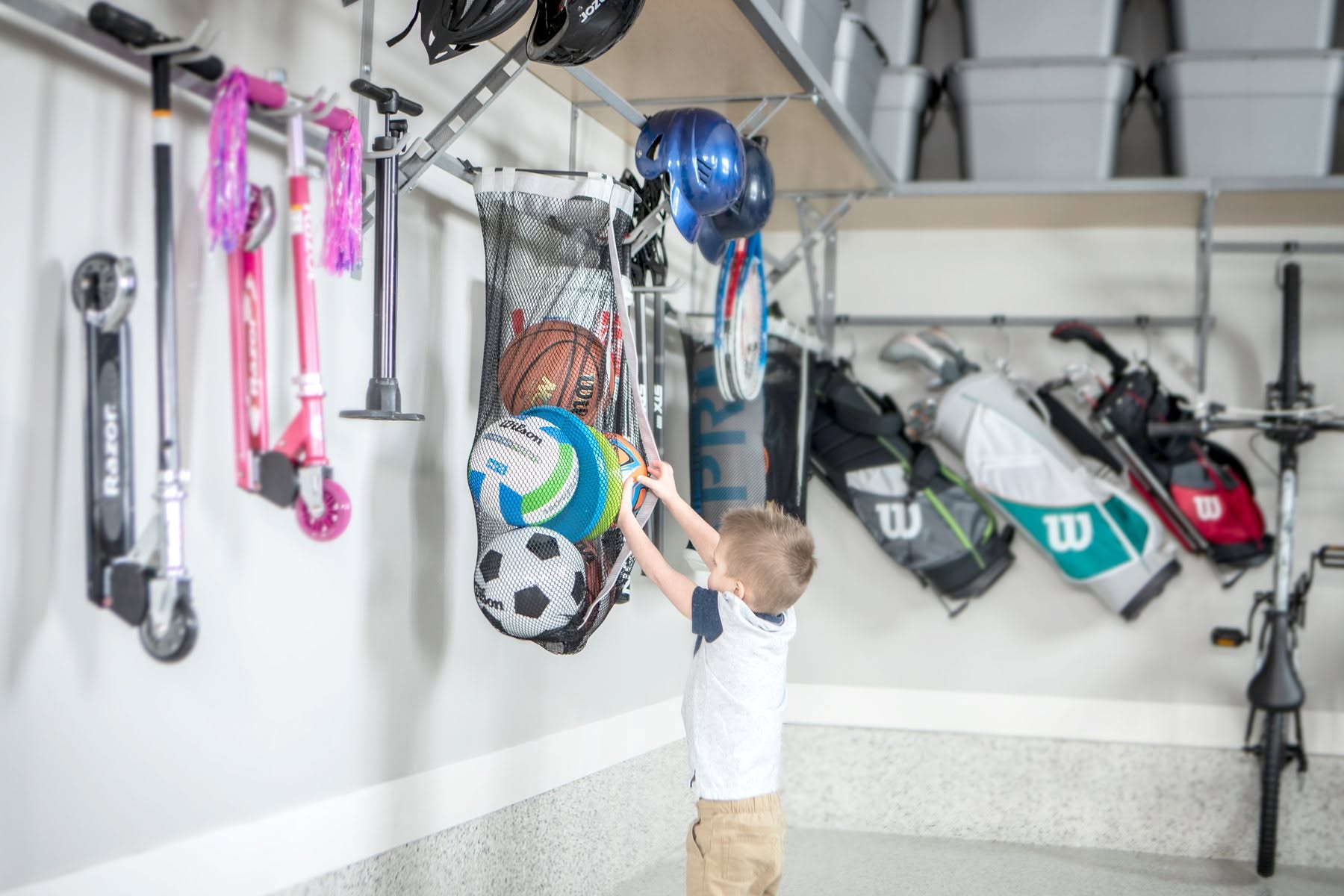
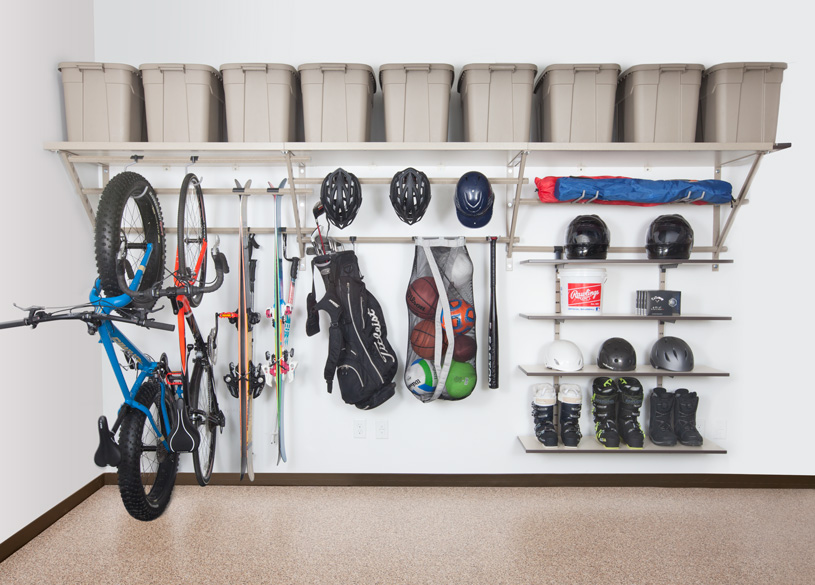
Keep Your Gear Organized and Ready for Every Adventure
Sports equipment has a way of taking over garages, mudrooms, and storage spaces. From bikes and helmets to balls, bats, and outdoor gear, it can be difficult to keep everything organized and easy to find. Our custom storage solutions help you create a dedicated place for every item, making it easier to grab what you need, stay active, and keep your home free of clutter.
Sports Storage Designed Around Your Lifestyle
Whether your family spends weekends on the field, the trail, the court, or the water, the right storage system helps protect your equipment and keeps it ready for action.
Our sports equipment storage solutions include:
- Adjustable shelving systems
- Wall-mounted racks
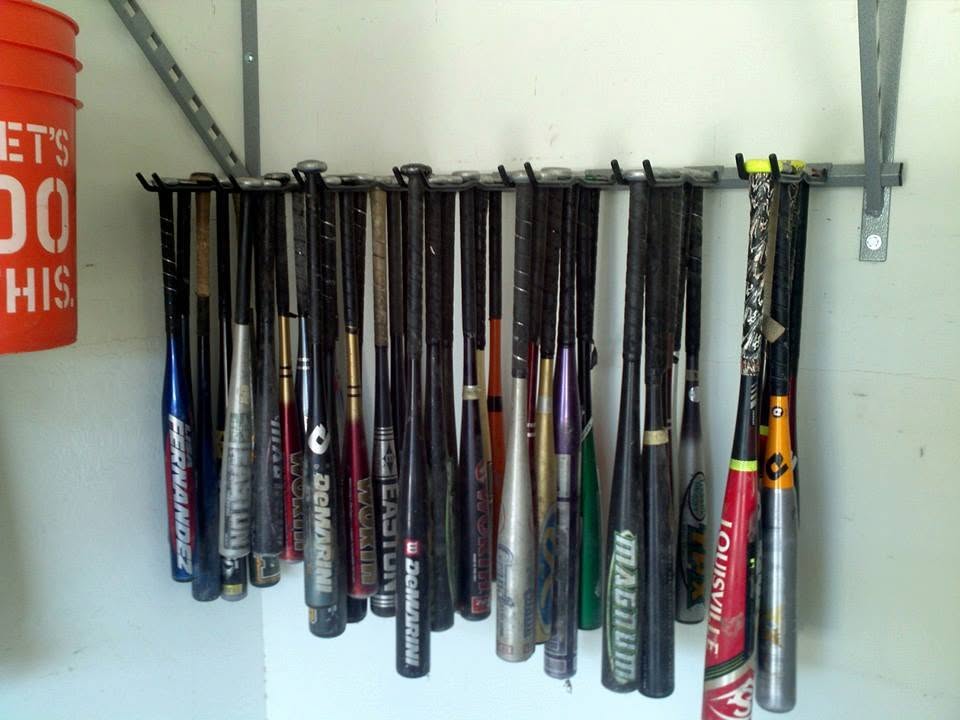
- Specialized hooks and hangers
- Ball storage solutions
- Bike racks and mounts
- Overhead storage systems
Why Invest in Sports Equipment Organization?
When every piece of gear has a designated place, life gets easier and your equipment stays in better condition.
With organized sports storage, you'll enjoy:
- Faster access to equipment when it's time to play
- Better protection for valuable gear
- Less risk of damage, loss, or unnecessary wear
- More usable garage and storage space
- Fewer tripping hazards and improved safety
- Easier inventory management for active families
Instead of wasting time searching for missing equipment, you'll have a storage system that keeps everything organized, protected, and ready for your next game, practice, or outdoor adventure.
Contact us to learn more about how we can make your garage the best room in the house.

Your new home in 3 easy steps
Consultation and Quote
Call, text, or contact us to schedule a free design consultation. We’ll talk through your goals, show material samples, and provide a line item estimate for your future garage.
Garage in 2-6 Weeks!
We’ll prep your garage, install flooring first, then storage. We’re respectful of your time and HOA guidelines—no dragging the job out for months.
Your dream now a reality, you can now find what's in your garage, use your garage to park your car and show it off to the neighborhood. Now enjoy a clutter-free, stress-free garage.
The Hidden Cost of Generic Sports Storage
When homeowners stack bikes against drywall, lean skis in corners, or pile climbing gear on wire racks not rated for dynamic loads, they build a system designed to collapse. Freestanding shelving units tip forward when someone grabs a helmet off the top shelf. Big-box pegboard hooks fail within a season because mounting anchors pull out of garage studs under cyclic load. Helmets stored on bare concrete absorb humidity. Kayaks hung from single-point hooks warp. What looks organized in October becomes a floor pile by March because the storage was never set up for how a busy family actually grabs things day to day.
The real failure happens during transitions—when you need ski gear out and mountain biking gear in, when the family is loading for a weekend trip and every second of access time matters. Generic storage forces you to move three items to reach one. Wall-mounted racks installed without load calculation sag, then tear free. Roughly 25% of homeowners with two-car garages cannot park even one car inside because of accumulated clutter, and sports equipment is often the worst offender because its bulk, odd shapes, and seasonal rotation make it the hardest category to contain without purpose-built infrastructure.
Asheville's outdoor culture intensifies the problem. Households here accumulate climbing rope, crash pads, multiple bike sets, fishing rods, camping gear, paddling equipment, and winter sports gear simultaneously. Without a system that segregates seasonal gear, accommodates vertical storage for long items, and maintains quick access to high-rotation equipment, the garage degrades into a barrier between you and the activities you moved here to pursue.
Our Engineering Process for Sports Equipment Storage
We don't sell cabinets by the linear foot. We draw up your entire storage setup on the computer before installation, calculate wall capacity, and design around your actual gear and retrieval patterns. Here's how we build systems that stay organized through years of hard use.
Comprehensive Assessment and Load Mapping
We start with a free on-site consultation where we inventory your equipment by category, weight, frequency of use, and seasonal rotation schedule. Bikes, kayaks, skis, and paddleboards all impose different structural demands. We measure your garage walls, locate studs, identify electrical and HVAC conflicts, and photograph your current layout. This data feeds into our CAD system, where we pre-visualize the installation and calculate distributed loads across wall-mounted systems.
Elizabeth Faulkner wrote in her review: "We found The Garage Authority on Angie's List (they were highly recommended!) and were soon on our way to transforming our garage. After installing the Monkey Bars and all the accessories we chose when designing our garage organization system, we were able to get everything – bikes, lawn equipment, tools, toys, EVERYTHING - off our floor!"
We identify failure points before installation. If you're storing two adult mountain bikes, a road bike, a kids' BMX, and a tandem, we calculate the combined static load, then add a safety factor for dynamic stress during removal and replacement. We never mount heavy equipment to drywall alone or use expansion anchors in cracked concrete. Every wall-mounted rack ties directly into framing or receives reinforcement blocking installed behind the surface.
Custom Design and Material Selection
Using your inventory and CAD layout, we design a system that segregates gear by type and season. High-rotation items—helmets, water bottles, day packs—go on slatwall hooks at eye level near the entry door. Bikes mount on horizontal or vertical racks depending on ceiling height and whether you prioritize floor space or wall space. Long items like kayaks, paddleboards, and fishing rods require overhead or high-wall horizontal racks with padded contact points to prevent hull deformation and rod damage.
We specify materials based on your load profile. Steel shelving and racks handle the heaviest gear. Powder-coated finishes resist the humidity Asheville garages experience during summer. Adjustable hook systems let you reconfigure storage as your gear collection changes. Overhead racks install on ceiling joists with lag bolts rated to the actual load plus 50%. Slatwall panels mount to plywood backer boards screwed into studs every 16 inches, distributing hook loads across the entire panel rather than concentrating stress at a single anchor point.
Carolyn H Buchanan described the design process in her review: "Initially, Nancy created a personalized plan for our garage incorporating monkey bars, a craft area, cabinets, and flooring --all color coordinated. Then this endeavor became a reality! We found all staff members of this outstanding organization to be courteous, prompt, and efficient."
Professional Installation with Code-Compliant Anchoring
Our installation crews arrive with the CAD plan, all materials pre-staged, and a step-by-step sequence that minimizes disruption. We begin by marking stud locations and drilling pilot holes for all wall-mounted components. Overhead racks install first, anchored directly to ceiling joists. Wall-mounted bike racks follow, with each bracket lag-bolted through drywall into solid framing. Slatwall panels attach to backer boards with construction adhesive and mechanical fasteners every eight inches. We torque all fasteners to specification and inspect each connection before loading.
Shelving units install with anti-tip brackets anchored to studs or concrete, preventing forward rotation when items are removed from high shelves. We configure lower shelves for bulky, low-value items like coolers and camp chairs, mid-height shelves for helmets and bags, and overhead storage for seasonal gear you access twice a year. Bike racks position handlebars to avoid contact, and we install wheel hooks so bikes hang vertically in narrow spaces or horizontally where ceiling height permits.
We test every rack under load before we leave. Bikes go on their hooks, kayaks onto their cradles, climbing gear onto designated pegs. If anything shifts or sags, we reinforce immediately. Chris Champlin noted in a recent review: "So happy with the result of my garage. I literally feel joy each time I step outside the garage door or open my garage. The quality is excellent. The team had an issue filling a crack, it did not meet their own quality standards, and they come back to do it all over again. Very polite, very professional and efficient."
Configuration and Labeling
Once the system is installed, we configure it with your gear in place, refining hook positions and shelf heights based on real access patterns. We label zones—winter sports, cycling, water sports, camping—so every family member knows where gear belongs. We demonstrate retrieval sequences that prevent the need to move three items to reach one, and we provide maintenance guidance: how to clean slatwall, when to inspect fasteners, and how to adjust hooks as your collection evolves.
We leave you with a system diagram showing load limits for each component, recommended inspection intervals, and contact information for future expansion. As your gear needs change, we can add hooks, racks, or overhead storage without tearing out the original installation. The infrastructure we build is designed for long-term adaptation, not replacement.
Market Data on Garage Organization Investment
According to HomeAdvisor, most homeowners spend an average of $1,327 on garage organization, with prices ranging from $505 to $2,156. Labor runs $55 to $75 per hour and you should budget for three to four hours minimum for basic shelving installations. However, engineered systems that handle specialized sports equipment—bikes with carbon frames, kayaks requiring padded cradles, climbing gear needing ventilated storage—typically fall into the higher end of that range or exceed it, because the consultation, CAD modeling, and load-rated hardware add material and labor cost that generic shelving projects do not require.
The investment pays back in preserved equipment lifespan and maintained home value. Research shows that most homeowners discover they can eliminate 20% to 40% of their garage contents during a thorough declutter, and a well-organized two-car garage costs $500 to $5,000 depending on the system's complexity. For Asheville households with thousands of dollars in bikes, kayaks, skis, and climbing gear, proper storage prevents damage that far exceeds the cost of the system itself.
What Our Customers Say
"Initially, Nancy created a personalized plan for our garage incorporating monkey bars, a craft area, cabinets, and flooring --all color coordinated. Then this endeavor became a reality! We found all staff members of this outstanding organization to be courteous, prompt, and efficient. Note: People don't realize the psychological benefits of an appealingly customized garage."
— Carolyn H Buchanan
"Had my garage fitted floor to ceiling with custom installed shelving to maximize storage space. Great coordination and communication despite the pandemic having us do everything virtually up to the day of the install. Super professional. Absolutely pleased with the product and the labor."
— David Clarkson
"The Garage Authority did a wonderful job in organizing our 3 car garage in Greenville, SC! They were very professional in both the original consultation and during the installation. The Monkey Bar System allow us to organize our accumulating garage clutter in a very accessible and practical manor."
— Jeremy Russell
Serving Asheville and Western North Carolina
We provide sports equipment organization services throughout Asheville and the surrounding communities in Buncombe County and Western North Carolina. Our team travels to neighborhoods across the region, bringing the same CAD-modeled design process and engineered installation standards to every project. Whether you're in downtown Asheville, the Blue Ridge Mountains foothills, or nearby towns, we deliver custom storage solutions designed for the outdoor lifestyle this area demands.
Sports Equipment Storage FAQs
How to organize sports equipment?
Start by sorting gear into categories—bikes, water sports, winter sports, climbing, camping—and then assign each category a dedicated zone on your garage walls or ceiling. Use wall-mounted racks for bikes, overhead cradles for kayaks and paddleboards, slatwall hooks for helmets and bags, and shelving for bulky items like coolers and camp chairs. The key is anchoring every component directly to studs or ceiling joists so the system can handle the combined weight of your gear plus the dynamic load imposed when you remove or replace items. Professional installation ensures proper load distribution and long-term reliability. We design systems in CAD before installation so every piece of equipment has a designated, accessible location that prevents the need to move multiple items to reach one.
Can you sell sporting clothes to Play It Again Sports?
Play It Again Sports buys and sells used sporting goods, including equipment and apparel, but their acceptance policies vary by location and current inventory needs. Typically they purchase gently used athletic gear, team uniforms, and sports clothing that meets their quality standards, offering cash or store credit. It's best to call your local Play It Again Sports store before bringing items in to confirm what categories they're currently accepting and whether they buy clothing in addition to hard goods like equipment. While we don't handle resale, organizing your sports gear often reveals duplicate or outgrown items that resale shops like Play It Again Sports can help you move.
What sports are popular in Asheville?
Asheville's location in the Blue Ridge Mountains makes mountain biking, rock climbing, hiking, and paddling some of the most popular outdoor activities in the area. Road cycling thrives on the region's scenic routes, while kayaking and paddleboarding draw enthusiasts to the French Broad River and area lakes. In winter, residents drive to nearby ski resorts for downhill and cross-country skiing. Trail running, camping, and fishing round out the outdoor sports culture. This diverse activity profile means Asheville households accumulate bikes, climbing gear, paddling equipment, camping supplies, and seasonal sports gear simultaneously—creating storage challenges that require specialized systems designed to handle the volume, variety, and rotation patterns of an active mountain community.
Ready to Organize Your Sports Equipment in Asheville?
We're The Garage Authority, and we've spent over 14 years designing sports equipment storage systems for Western North Carolina's active families. Our CAD-modeled, load-rated installations keep your gear accessible, protected, and off the floor. Call or text us at (828) 202-7429 to schedule your free comprehensive design consultation, or visit our office Monday through Friday, 8:00 am to 4:30 pm. After-hours appointments are available. Let's build a system that works as hard as you do.